
Pieter Lategan
Stone Bench Study — Moroccan Priest
Digital artwork, 2026
18 March 2026
Pretoria, South Africa


2027 Calendars - by Pieter Lategan
Update: 2 March 2026

Creation Date: 28 February 2026

Structrural Monumentalism - Pieter Lategan 2026


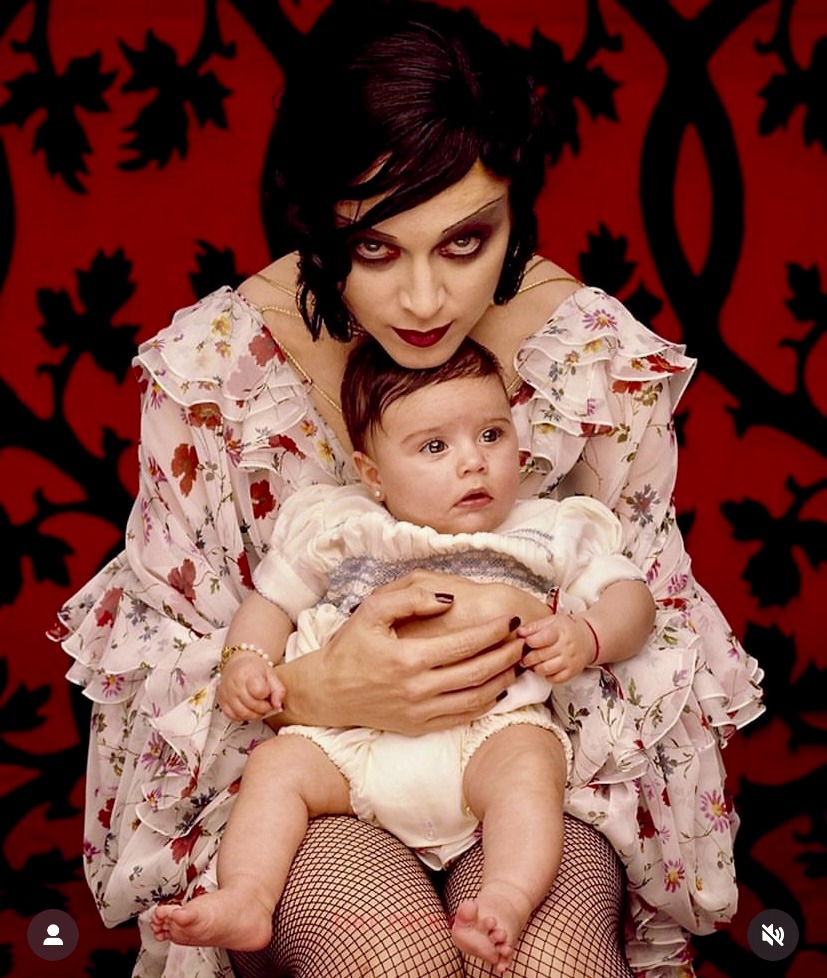
The song “Sexo, Violencia y Llantas” by Rosalía is a high-energy, rebellious track that mixes urban beats with her signature flamenco influence. Here’s a breakdown of its meaning:
Title Translation: “Sex, Violence, and Tires” – the words are symbolic rather than literal.
Themes: The song talks about freedom, excess, and living on the edge. It paints a picture of nightlife, fast cars, and chaotic energy, using sex, violence, and car imagery as metaphors for risk, desire, and rebellion.
Tone: It’s both playful and provocative, reflecting a bold, unapologetic attitude. Rosalía often mixes metaphor and storytelling, so the song reads like a cinematic snapshot of a wild, almost chaotic lifestyle.
In short, it’s not meant to glorify literal violence or sex, but to capture a feeling of intensity, excitement, and living life without rules.
Please visit Sketchbook | click here |
About The President Javier Mile
Argentine economist and politician who became President of Argentina in December 2023. He is known for his libertarian and outspoken views, often challenging traditional political norms in Argentina.
Personal Life:
Milei is not married and does not have a spouse, so there is no “first lady” of Argentina under his presidency.
He has been private about his personal life and family. Most of his public image focuses on his politics and economic views.


Klaar Hout
Ek kan nie meer nie,
ek weet nie meer nie, Here.
Ek wil verstaan, wil nie meer weet nie.
Ek ken U, ek weet van U,
ek weet U weet net van my.
Ek gaan nie meer.
Ek is dood as ek by U is.
Ek hou van later-taal, ek gebruik dit dikwels.
Ek laai dit, God.
O Here, die hel is hier.
Dis warm, dit vertel ’n storie.
Here, dit is narratief.
Here God, ek verstaan dit nie, ek weet nie.
Ek hou van vloek — God weet, ek sal gestraf word.
Misbruik die woord, ontken die splinters in my oë.
Erken glas wat sny met en tot die dood.
Die kruis is verby, maar God het gelei.
Hy is vry, Here God, vertel my.
Ek wil nie meer nie, die hel is hier.
Dan glo en mis ek al die goeie hier.
Maar Here, U weet: as dit beter gaan,
is dit net plesier, my dier… met die spier.
Ek kom daar aan, ek vra: waar is die hel?
Die een wat die hekkie bewaar, sê daar.
Ek sê toe ek sien waar.
My ma en die haarbrak kom daar aan, sy sê: ek het gesê daar.
Ek sê: ek weet, dis waar.
Ek kom daar aan en voel dis effens koud.
Hulle vra toe dat ek asb moet wag,
want die hout is klaar.
— Pieter Lategan, 2026
Pieter Abraham Lategan (My Vader)
Gebore: 30 November 1947
Oorlede: 9 Junie 2006 — Stilbaai Suid-Africa
Frans Claerhout
Gebore: 15 Februarie 1919
Oorlede: 4 Julie 2006 — Bloemfontein, Suid-Afrika
Vladimir Grigoryevich Tretchikoff
Gebore: 13 Desember 1913
Oorlede: 26 Augustus 2006 — Kaapstad, Suid-Afrika
P

Silent Monumentalism Project
Mukurob — the iconic “Finger of God” — once stood as a singular natural monument rising from the southern Namibian desert. For generations, travelers on the B1 highway paused to see its elegant form reach toward the sky. Although the original formation collapsed in 1988, its memory remains part of Namibia’s geological and cultural heritage.
Silent Monumentalism asks a different question: not how to rebuild what was lost, but how to honour absence, space, and presence without replacement.
This image is not a literal reconstruction. It is a presence in absence — a field of light that stands where Mukurob once stood, a quiet marker of memory and attention.
It does not explain, it does not narrate; it simply invites presence — a place where form and space coexist before meaning. In this way, Mukurob continues to stand — not as a physical rock, but as a remembered presence in the mind, the landscape, and our collective attention.
Distance
Mariental (north): ~180 km
Keetmanshoop (south): ~140 km
Asab (nearest settlement): ~15 km
Silent Monumentalism — Pieter Lategan, 2026
Reference:
Mukurob - 18 February 2026

Stonehenge is one of the most remarkable prehistoric monuments in the world, not only because of how it looks, but because of how its stones came to be there. Archaeological research shows that many of its stones were not taken from the immediate area. The smaller bluestones came from the Preseli Hills in southwest Wales, and scientific studies suggest that the central Altar Stone may have come from as far away as northeast Scotland. These stones were deliberately selected and transported by people over great distances. This was not an accident of nature, and not the result of erosion or glaciers. It was a human decision, carried out with effort, planning, and intention.
What Stonehenge teaches us is not that local stone was “bad,” but that material choice matters. The builders chose specific stones and moved them because they wanted a monument that could stand, carry weight, and endure. Stonehenge is therefore not only a form in space, but also a record of human will, collaboration, and material understanding. Its endurance is not only a gift of time, but the result of deliberate human decisions about material and structure.
In Namibia, the story of God’s Finger (Mukurob) is very different. It was a natural monument, shaped by geological time, wind, and erosion. It stood as long as its material allowed — and then it collapsed. This was not a human failure, and not a mistake. It was the limit of natural material meeting time and gravity.
If we think today about rebuilding, re-marking, or re-imagining that place, we cannot simply repeat what nature already showed us does not last. The original stone is not strong enough to carry the same presence into the future. Instead, we must think like builders, not like erosion. We must use contemporary knowledge, treated materials, and advanced technology to create a structure that looks and feels like the original presence, but is structurally corrected by human understanding.
In this way, a new monument would not pretend to be nature. It would openly be a human act: a deliberate choice of material, a deliberate act of construction, and a deliberate decision to let form, weight, and balance stand against time. Just as Stonehenge is not a natural accident but a human statement in stone, a new monument at Mukurob would be a human answer to loss — not a copy of what erosion has already taken away.
This is not about replacing nature. It is about acknowledging its limits, and responding with responsibility, knowledge, and care.
Read more in Pieter Lategan Sketch Book: Why Stonehenge Endures and What Mukurob Teaches
Words
All
over my space
are words
a lot of words
Silent Monumentalism is a way of writing that trusts silence as structure, repetition as gravity, and simple language as presence. It does not explain; it stands. The white space on the page is not absence but architecture. Words are pared down not to weaken meaning but to sharpen it — so that each one carries weight like a quiet pillar in the landscape of the page. This style invites readers to slow down, to return, and to feel what is unspoken between lines. It is a monument built not with stone, but with stillness.

Image Description — Silent Monumentalism Proposal
This image presents a conceptual reconstruction of Mukurob, also known as God’s Finger, reimagined through the principles of Silent Monumentalism. The monumental sandstone pillar rises once again from the Namib Desert, stabilized through discreet, non-invasive interventions that remain visually subordinate to the geology itself. Ultra-thin tension systems and subtle ground stabilization are integrated quietly, allowing the monument to retain its sense of isolation, balance, and silence.
Rather than reconstructing Mukurob as a replica or spectacle, this proposal suggests a measured return of presence—one that acknowledges what was lost while offering a space for reflection and storytelling. People are drawn to places where history, memory, and form converge. They travel to see monuments not only for what they are, but for what they represent.
By restoring Mukurob through Silent Monumentalism, the monument becomes a narrative device: a way to tell the story of its rise, its designation as a National Monument in 1955, its collapse, and the fragile relationship between nature and human responsibility. This is not an attempt to erase the past, but to give the landscape its voice back.
Monuments matter because people seek them out. They want to stand before them, feel scale and time, and understand what once stood there. This proposal argues that bringing Mukurob back—quietly, respectfully, and honestly—allows the story of what happened to be experienced in place, not forgotten in photographs alone.
Sometimes preservation is not about stopping time, but about giving memory a form once more.
Mukurob, commonly known as God’s Finger, was a naturally occurring sandstone pillar whose significance lay not in human authorship, but in geological time, balance, and restraint. Declared a National Monument in 1955, Mukurob marked an important cultural moment in which a fragile natural formation was formally recognized as monumental. Its collapse in 1988 should not be understood as a symbolic failure, but as the inevitable outcome of long-term erosion, material fatigue, and gravitational stress acting upon a highly precarious structure.
However, inevitability does not preclude responsibility. While Mukurob was shaped by natural forces beyond human control, its status as a national monument introduced an ethical obligation to explore measured, non-invasive forms of preservation. The challenge was not to dominate or arrest nature, but to intervene with restraint.
Silent Monumentalism proposes such an approach. Rather than employing visually assertive engineering solutions, this methodology emphasizes minimal intervention, geological sympathy, and visual silence. It aligns architectural preservation with contemporary scientific practices, including micro-structural analysis, stress modeling, and environmental monitoring. The objective is not permanence, but temporal extension—allowing a monument to continue existing without compromising its symbolic and visual integrity.
Applied to Mukurob, Silent Monumentalism could have incorporated ultra-thin tension systems anchored discreetly into surrounding bedrock, low-impact base stabilization using material-matched micro-buttressing, and embedded sensor technology to monitor vibration, wind load, and progressive material degradation. Such technologies—now common in heritage conservation—could have identified critical stress thresholds long before structural failure occurred.
Importantly, these interventions would have remained visually subordinate to the monument itself. Silent Monumentalism does not seek to overwrite nature with technology, but to use science as a quiet collaborator. It acknowledges impermanence while rejecting passive neglect. Mukurob fell not because it lacked value, but because its fragility was left entirely unattended.
Silent Monumentalism exists to address precisely this tension: to preserve without spectacle, to stabilize without dominance, and to listen to monuments shaped by time rather than speak over them.
Wikipedia — Stonehenge
Wikipedia — Bluestone (Stonehenge)
Wikipedia — Altar Stone (Stonehenge)
Reference:
Mukurob | "Gods Finger" |National Monument
Change 1: Create an opening on either the left or right side of the structure, shaped to follow the outline of the former Mukurob (“God’s Finger”) rock formation. Change 2: This opening will be oriented to face the exact direction where the original Mukurob (“God’s Finger”) once stood, aligning the new structure with what existed before and creating a visual and conceptual connection between the past and what is now being re-created.


This is a digital structural design by Pieter Lategan, created in 2026 in Pretoria, South Africa.
The work forms part of ongoing research into Quiet / Silent Monumentalism, exploring repetition, weight, and silence through restrained structure rather than narrative or illustration.


This digital pencil study presents the seated figure of The Priest removed from its architectural context. The body folds inward, resting on itself, with the head supported by the hand in a posture of contained reflection.
The drawing focuses on structure, weight, and inward presence rather than expression or story. The figure is treated as form and mass, emphasizing restraint, stillness, and internal gravity — central to the language of Silent Monumentalism.

This image presents two digital pencil structure studies of The Priest, focusing exclusively on the seated body and its physical organization.
The left study shows a light under-drawing used to establish posture, axis lines, and proportional relationships. The right study develops this structure into simplified block forms and body mass, clarifying weight, balance, and spatial grounding.
No attention is given to facial expression, clothing detail, or surface texture. The drawings exist purely to understand the body as structure and mass within a seated, inward posture.

This image presents two digital pencil structure studies of The Priest, focusing exclusively on the seated body and its physical organization.
The left study shows a light under-drawing used to establish posture, axis lines, and proportional relationships. The right study develops this structure into simplified block forms and body mass, clarifying weight, balance, and spatial grounding.
No attention is given to facial expression, clothing detail, or surface texture. The drawings exist purely to understand the body as structure and mass within a seated, inward posture.

This digital pencil study isolates the architectural background of The Priest.
An arched recess defines the space, constructed through soft cross-hatching and restrained tonal variation. The surface carries quiet ornamental traces, but remains structurally dominant rather than decorative.
The background functions as a container for stillness — a spatial field designed to hold presence without narrative. It is intentionally empty, allowing weight, silence, and inward tension to exist before the figure is introduced.

Quiet / Silent Monumentalism
This work forms part of an ongoing body of work developed within my Quiet / Silent Monumentalism framework. It is conceived as a structural and tonal study, focusing on inward presence, gravity, and restraint rather than narrative or symbolism.
The figure is seated and inward-turned, grounded through weight and compression. Gesture is withheld. Expression is restrained. The work prioritises presence over explanation, silence over drama, and dignity over spectacle.
Colour is treated structurally rather than expressively, using muted, restrained tones to establish mass and stillness. The environment remains minimal and architectural, allowing the figure to hold the space without distraction.
This digital study serves as a preparatory work and will be translated into physical paint. Further refinement will occur through material process rather than conceptual expansion.

.png)

This image forms part of an ongoing body of work developed within my Quiet / Silent Monumentalism framework. The work is currently in progress and functions as a structural and tonal study rather than a resolved statement.
The figure is abstracted and inward-turned, constructed through weight, compression, and restraint rather than narrative or symbolism. Colour is treated structurally rather than expressively, with muted greens and worn gold traces used to establish presence and gravity rather than decoration.
The image does not depict a specific individual, historical figure, or narrative moment. It exists as a formal investigation into stillness, inward presence, and monumental restraint.
Further refinement and translation into physical painting will follow.
This study was developed through an internal studio framework focused on structural clarity, balance, and restraint.
Digital artwork (in progress), 2026
Pieter Lategan

Gilded Ground (Quiet Monumentalism)
Background study for The Priest
Digital ground, 2026
Square format (1m × 1m)Technical specifications
Final format: 100 × 100 cm (1m × 1m)
Aspect ratio: 1:1 (square)
Resolution for painting reference / print: 300 DPI
Status: Locked master ground
Use: Fixed background for oil paintings and related studies
This background is created as a standalone ground and is not intended to change between works. The figure will enter and leave this space, but the ground remains constant.
Concept and use
The background functions as a holding space, not as decoration. It suggests architectural memory rather than a specific location. While the curved form and spatial logic are informed by North African and Moroccan mosque interiors, the image does not describe a literal mosque. It remains deliberately open, architectural, and inward.
Gold is used not as ornament or symbolism, but as surface memory — worn, layered, uneven, and restrained. The gold tones are intended to feel aged and absorbed into the structure, closer to patina than to brilliance.
The background establishes:
stillness
gravity
inward space
silence
It allows the figure to exist without narrative instruction.
Colour and material intention
The palette is built around:
muted gold
deep earth tones
softened shadow
restrained contrast
In the final oil painting, this effect will be achieved through layered underpainting, glazing, and selective use of metallic or mineral-based gold tones, applied sparingly and worked back into the surface rather than sitting on top of it.
Painting process (recommended order)
The background will be painted first, before the figure.
This allows:
the ground to settle visually and emotionally
the figure to respond to the space, not dominate it
correct control of scale, gravity, and tone
The figure will be developed afterward, directly into the established ground.
Authorship note
This background was conceived, developed, and authored as part of the ongoing body of work Quiet Monumentalism. It exists as an independent component within the work and may be reused consistently across related paintings.

Pieter Lategan, 2026
Oil painting (in progress)
The Priest is part of an ongoing body of work exploring inward presence, dignity, and restraint within contemporary African life.
The figure is not symbolic and not narrative. He is seated, inward-turned, and suspended in thought. The posture—heavily tilted, asymmetrical, and weighted—draws structurally from early modern figurative painting, particularly the inward poses found in Irma Stern’s work. These references are not quoted but absorbed, forming the physical grammar of the image.
Colour operates with similar restraint. The controlled skin tones recall mid-century portrait logic, while the silver-white architectural background creates space rather than context. Nothing is described beyond what is necessary for presence.
Set within a Moroccan context, The Priest reflects a living African religious landscape without illustration or spectacle. The painting resists explanation. It asks for attention rather than interpretation.
This work belongs to what I describe as Quiet Monumentalism—a contemporary painterly language concerned with weight, stillness, and the authority of silence.
— Pieter Lategan
Pretoria, South Africa
2026
Development note:
This work forms part of a long-term inquiry. An earlier research post from 2024, reflecting on the painter Frans Claerhout and the figure of The Priest, marked an initial point of reflection that later informed this study.Readers interested in the early stages of this thinking may view the reference post here:
The Priest — Frans Claerhout (2024)
https://pieterlateganart.blogspot.com/2024/08/the-piest-frans-claerhout-painter.html

The Priest of Silent Monumentalism
For galleries, collectors, and readers interested in process and discipline,
detailed Studio Notes are available here: Click Here - STUDIO Notes (Link to follow)


This post documents design studies and visual explorations that are not approved for production by Pieter Lategan | STUDIO.
These images form part of my internal design and research process. They are shared for transparency and documentation only, and do not represent finished products or items intended for manufacture, sale, or licensing.
The designs shown here are explicitly excluded from future production. They may contain unresolved structural, material, or conceptual elements and are retained as part of the studio’s development archive.
No individual, company, or manufacturer is authorised to reproduce, manufacture, distribute, adapt, or commercialise these designs in any form.
Any unauthorised use, replication, or commercial exploitation of these works — including by copycat or counterfeit producers — constitutes a violation of copyright and studio policy.
© Pieter Lategan, 2026
All rights reserved.


Fabric Study — Concept in Progress
This video shows an early exploration of fabric options for a sculptural bag concept currently in development.
The materials shown are not final selections, but part of a tactile thinking process — considering weight, texture, flexibility, and how fabric holds form.
The intention is to create a hand-made piece, where the fabric will be carefully selected in dialogue with the object’s structure and use.
Material choice will be guided by restraint, durability, and presence rather than decoration.
This is a working study.
Final fabric, colour, and construction will be decided through making.

This image represents an early process study rather than a finished design.
The starting point was a Quiet / Silent Monumentalism figure study. I removed the background entirely, isolating the abstracted form so that only mass, weight, and structure remained. What interested me was not the figure as a body, but the figure as volume — a contained presence defined by compression, fold, and gravity.
By stripping the image down to its essential shape, the form could be read differently: not as a person, but as an object with architectural logic. This allowed me to begin thinking about how a sculptural presence might translate into a functional object, such as a bag, without becoming decorative or illustrative.
At this stage, the work is intentionally unresolved. The image documents a way of thinking rather than a solution. It marks a transition point between painting, object, and material exploration, where questions of fabric, structure, and use will be tested slowly and rigorously.
This is a working process. The final outcome may change significantly, but the core concern remains the same: restraint, material intelligence, and form carrying meaning without explanation.
Work in progress, 9 January 2026 - Pretoria, South Africa
Pieter Lategan


By Pieter Lategan — Personal Working Notes
16 January 2026, Pretoria, South Africa
This post records a moment of transition in my practice — from searching for a visual style to committing to a structural discipline.
Silent Monumentalism is not built through symbolism, emotion, or narrative.
It is built through structure: mass, weight, resistance, and restraint.
My recent sketches explore this discipline through a limited structural exercise using only three elements:
The figure
Rather than inventing a new form, I consciously studied the seated structure of Henri Matisse’s Blue Nude (1907) |click the link| — not for its colour, sensuality, or expression, but for its compressed mass and seated gravity.
I do not adopt Matisse’s bold colour language. In Silent Monumentalism, colour dominance creates noise and narrative. Stillness must operate before meaning, not through emotional cues. Any reference to blue in my work is subdued, absorbed into grey tonal structure — not to speak, but to carry weight.
The figure in this study is intentionally stripped of theatrical nudity, expressive gesture, and invitation. What remains is a body treated as structure — heavy, grounded, and resistant to interpretation. The posture does not perform. It does not persuade. It exists.
Behind the figure, architectural blocks do not describe a setting. They act as pressure. The background is not empty space — it is resistance. Like air displaced by a wall, negative space here is defined by what cannot exist there.
This work does not belong to a time. It does not reference a moment or event. It is meant to function in any time — not as an image to decode, but as a presence to encounter.
My background in design — medals, graphic systems, branding, and web architecture — has shaped this discipline deeply. Design teaches restraint, hierarchy, and structure. It teaches that speed creates decoration, while slowness builds clarity.
Silent Monumentalism demands slow thinking because it removes shortcuts. It rejects decoration. It refuses story. It leaves the viewer alone — not out of coldness, but out of respect.
These sketches are working notes. They may never become finished paintings. Their purpose is structural understanding, not resolution.

Title:
Silent Monumentalism — Structural Study (In Progress)
Medium:
Pencil on paper
Artist:
Pieter Lategan
Pretoria, 2026
Video
Title:
Silent Monumentalism — Structural Study (In Progress)
Artist:
Pieter Lategan
Pretoria, 2026
This sketch is not a finished artwork.
It is a structural thinking exercise.
In Silent Monumentalism, a form must read physically before it can be read intellectually. If a structure appears dangerous, unstable, or ready to act, it becomes narrative. Narrative introduces time, expectation, and emotion. That breaks silence.
Here, the figure is not a character. It functions as a structural condition. The arm does not gesture or lift. It presses downward. The figure does not “hold” the architecture as an action; it holds it ontologically — meaning that without the figure, the structure would not exist at all.
This distinction is critical.
If something looks as if it could happen, it is no longer Silent Monumentalism.
Remember:
“If something can happen, it is not Silent Monumentalism.”
The next sketch resolves remaining instability by redistributing load and removing any line that suggests potential movement.
This work stands.
Nothing happens.
Nothing will happen.
It is simply there.
Silent Monumentalism is a discipline developed and documented by Pieter Lategan.
It is grounded in structural logic rather than style, working through mass, weight, resistance, and restraint. Meaning is not instructed or narrated but emerges through physical presence and spatial fact. The discipline prioritizes repeatable systems over expressive variation, allowing the work to exist across drawing, painting, sculpture, and design without dependence on symbolism or emotional display. Since 2026, Silent Monumentalism has been developed as an authored framework through ongoing practice, documentation, and applied studies.
Pieter Lategan Stone Bench Study — Moroccan Priest Digital artwork, 2026 18 March 2026 Pretoria, South Africa - read more | click here


