Social Media


Monday, July 20, 2026
Sunday, June 21, 2026
Real Art Access and Value Standard - A New Studio Direction by Pieter Lategan | STUDIO

Gathering Around the Fire | Pieter Lategan
Watercolour on Paper
29 May 2016
A2 (Folded to A4)
Johannesburg, South Africa
Archive No. PL-SM-EW-2016-0529-001
Style | Pre-Silent Monumentalism or Early Studio Work
There is a growing challenge facing artists today.
Many homes, offices and commercial spaces are filled with mass-produced prints, anonymous wall décor and digitally generated images, while living artists often struggle to place original artwork into the environments where people live and work.
At the same time, AI-generated images are becoming increasingly common. Millions of images can now be produced in seconds. That does not reduce the importance of human-made art.
For me, it means the opposite.
Human authorship matters more.
The hand matters more.
The sketchbook matters more.
The dated note matters more.
The physical surface matters more.
The artist's process, decision-making, archive, certificate and provenance matter more.
I am developing a new Pieter Lategan | STUDIO direction called the Real Art Access and Value Standard.
It is both a studio philosophy and a practical framework for documenting, presenting and placing original human-made artwork.
The aim is not to make art cheap.
The aim is to make real human-made artwork easier to discover, trust, document, collect and place in homes, interiors, furniture spaces, offices, lodges, guesthouses and business environments.
This system begins with my own studio work.
Every principle will first be tested within my own practice before being expanded further.
It grows from Pieter Lategan | STUDIO, Silent Monumentalism and Gravitas.
My work is concerned with structure, silence, weight, space, material presence, balance, distance and human presence. These concerns are not only visual. They also influence how the work is documented, presented, placed and understood.
Real art needs more than an image.
It needs:
- the artist's name
- title
- date
- medium
- dimensions
- process notes
- archive number
- certificate of authenticity
- provenance record
- clear photography
- a link to the studio archive
- a thoughtful explanation of why the work matters
This is where trust begins.
I do not believe that real art should only exist behind the walls of a few galleries, museums or elite spaces.
Galleries remain important, but they should not be the only route between artists and the public. Contemporary art also belongs in the places where people spend their everyday lives.
There should also be a stronger bridge between artists, interior designers, furniture stores, architects, homes, offices, boardrooms, lodges, guesthouses and everyday environments where people live and work.
A person buying furniture should also be able to discover original artwork.
A business designing a boardroom should also be able to consider real contemporary art.
A home should not only be offered anonymous prints when living artists are producing original work with genuine authorship and documented provenance.
The Real Art Access and Value Standard is my way of beginning to think through this challenge.
It asks:
- What makes an artwork ready for public sale?
- How can a collector know that an artwork is genuine?
- How can an artist document process without giving away the private studio?
- How can original artwork become more accessible without becoming cheap décor?
- How can artists build sustainable income through authorship, documentation, quality and trust?
- How can contemporary art enter interiors and business spaces without losing its seriousness?
This is not a finished system.
It is a studio direction.
It is a working framework.
It begins with Pieter Lategan | STUDIO and will be developed carefully through sketchbook pages, studio notes, original artworks, documentation, archive records, certificates, website pages and selected public posts.
The first step is not to flood the market.
The first step is to document properly.
To photograph properly.
To title properly.
To archive properly.
To explain properly.
To price carefully.
To build trust.
Real art should not disappear in the AI era.
It should become more human.
More documented.
More physical.
More traceable.
More present.
That is the direction I am committed to developing through Pieter Lategan | STUDIO.
- Pieter Lategan | STUDIO
Silent Monumentalism | Gravitas
Pretoria, South Africa
About the Artwork
Gathering Around the Fire
- Pieter Lategan
Early Studio Work (2016)
This watercolour was completed on 29 May 2016 in Johannesburg shortly after I left my position as an in-house designer to begin developing my own independent studio practice.
Although created before the development of Silent Monumentalism and Gravitas, the work already reflects interests that continue throughout my practice today. It explores human presence, gathering, shared space, movement and relationships between figures.
At the time, I was considering a solo exhibition that never took place. Rather than seeing this work as an unfinished chapter, I now recognise it as an important document within my studio archive. It records an early stage in the development of my artistic language and preserves a moment of transition between employment and independent practice.
Today, this painting also illustrates an important principle behind the Real Art Access and Value Standard.
Original artworks carry histories that cannot be separated from the objects themselves. Their value lies not only in the finished image but also in the documented process, authorship, date, place of creation and continuing archive.
This work therefore remains an active part of the Pieter Lategan | STUDIO Archive and contributes to the ongoing record of my practice.
Artist Statement — Gathering Around the Fire
Gathering Around the Fire was created in Johannesburg on 29 May 2016 during an important transition in my studio life. At the time, I had left my position as an in-house designer and was beginning to build an independent artistic practice.
The work records a moment of gathering, warmth and human presence. Although it predates Silent Monumentalism and Gravitas, it already contains concerns that remain important in my work: space, human presence, shared structure, memory and the emotional weight of place.
The folded A2 sheet, handwritten notes and reverse graphite rhino study form part of the complete archival object and its provenance.
Continue Exploring This Project
Read the Studio Notes → click here
View the Original Sketchbook Pages → click here
Start Here:
Real Art Access and Value Standard
See Sketchbook Study
See Notes Article
See Artwork Archive
Contact Pieter Lategan | STUDIO
Wednesday, May 6, 2026
Gravitas - A New Discipline within Silent Monumentalism
Pieter Lategan | STUDIO
2026
Pieter Lategan | STUDIO is beginning a new line of artistic research titled Gravitas.
Gravitas is being developed as a discipline within Silent Monumentalism, a conceptual and visual framework concerned with presence, structure, silence, restraint, and psychological weight.
Where Silent Monumentalism provides the wider framework, Gravitas will focus on a more specific question:
How can form, space, balance, and material presence create a feeling of weight, stillness, and quiet force?
This new direction will study the relationship between:
- solid mass and empty space
- balance and imbalance
- visual weight and silence
- proximity and tension
- grounded forms and suspended forms
- material honesty and structural presence
The work will begin through notes, drawings, diagrams, and small studies before moving into paintings, sculptural objects, desk pieces, wall works, and possible limited editions.
The first visual studies are still being developed and will be shared in the near future.
For now, this announcement marks the beginning of Gravitas as a focused discipline within Pieter Lategan’s ongoing development of Silent Monumentalism.
Pieter Lategan
Founder of Silent Monumentalism
Developing Gravitas within Silent Monumentalism
Pretoria Gauteng South Africa,
6 May 2026
Friday, April 17, 2026
Brutalism vs Silent Monumentalism – Side-by-Side Study by Pieter Lategan

• Brutalism | 1950's in Brittian
raw, confrontational, heavy visual impact, unfinished béton brut concrete, dramatic and aggressive presence.
• Silent Monumentalism | 2026 in South Africa
silent, contemplative, emotionally powerful, calm monumental presence.
Saturday, April 11, 2026
Online Handbook Silent Monumentalism - Pieter Lategan

Pencil Sketch by Pieter Lategan 11 April 2026
A3 Aqua Waterclour Paper
Friday, April 10, 2026
Wednesday, April 8, 2026
The 2026 IBM U-Turn & The Power of Human Expertise - AI vs. Humanity
 Image created by Pieter Lategan | STUDIO

Pieter Lategan | STUDIO — Perspective (2026)
We need to take skilled people—those with real knowledge, training, and discipline - and move them into direct human roles.
Not away from technology, but in front of it.
The role is simple:
Work with clients who do not yet understand AI, systems, or where things are going.
Technology must be shaped around the person, not the other way around.
The process is:
Understand → Structure → Apply → Deliver
This is where value is created.
Right now, there is a clear opportunity.
People do not trust systems they do not understand.
They need a human presence—someone they can speak to, ask questions, and feel understood.
This is not optional. It is necessary.
This approach matters even more in:
- Older generations
- People with disabilities
- Underserved and rural communities across Africa
These are not edge cases. This is reality.
The structure is clear:
- Technology works in the background
- Humans remain at the front
AI supports.
Humans guide.
This is not about replacing people.
It is about placing them correctly within the system.
A machine can process.
But it cannot replace clarity, judgment, or presence.
Build systems. Keep the human.
— Pieter Lategan
2026
link to notes | click here
Wednesday, April 1, 2026
Silent Monumentalism — Structural Poem | 2026
Silent Monumentalism — Block / Plane / Void (2026)
- this is for you, Mother!
[ BLOCK ] [ BLOCK ]| PLANE |< VOID > < VOID >| GROUND |-----------------------------
Monday, March 30, 2026
Digital Design of Silent Monumentalism

Digital Design of Silent Monumentalism
by Pieter Lategan
30 March 2026
Pretoria, South Africa
Friday, March 27, 2026
Pieter Lategan | STUDIO - Textile Work, Scrunchies
Scrunchies — Textile Work
This work forms part of my fashion and textile practice within Pieter Lategan | STUDIO. These scrunchies are made as practical, wearable objects for everyday hair use, focusing on simplicity, comfort, and durability.
Each scrunchie is constructed with attention to:
- durability for daily wear
- clean stitching and finishing
- simple, functional design
This work exists alongside my structural and conceptual practice, but operates at a more accessible level - where material, consistency, and use are central.
Wednesday, March 25, 2026
Pieter Lategan | STUDIO - "Don't Give Up on Me"
"Don't Give Up On Me | Andy Grammer - Mac arrangement |
Tuesday, March 24, 2026
Stone Bench Study

Digital Image created by Pieter Lategan
Wednesday, March 18, 2026
Stone Bench Study — Moroccan Priest

Pieter Lategan
Stone Bench Study — Moroccan Priest
Digital artwork, 2026
18 March 2026
Pretoria, South Africa
Friday, March 6, 2026
The Architecture of Power and Its Absence

Monday, March 2, 2026
After the Dance - Pieter Lategan | 2026

Where the Viewer becomes one of the Objects in the Painting
3 March 2026

Calenders for 2027 | The Study of Silent, Narrative, and Structural Monumentalism as my Discipline
2027 Calendars - by Pieter Lategan
Update: 2 March 2026

Structural Monumentalism - Pieter Lategan 2026
Creation Date: 28 February 2026

Structrural Monumentalism - Pieter Lategan 2026

Silent Monumentalism - Pieter Lategan 2026

Silent Monumentalism - Pieter Lategan 2026

Narrative Monumentalism - Pieter Lategan 2026

Narrative Monumentalism - Pieter Lategan 2026
Sunday, March 1, 2026

Monday, February 23, 2026
The Priest – Frans Claerhout (1919–2006)
Please note: this friend of Anton and I, whom we visited for dinner, owns only two oil paintings. These are not the only oil paintings made by Frans Claerhout (1919–2006).
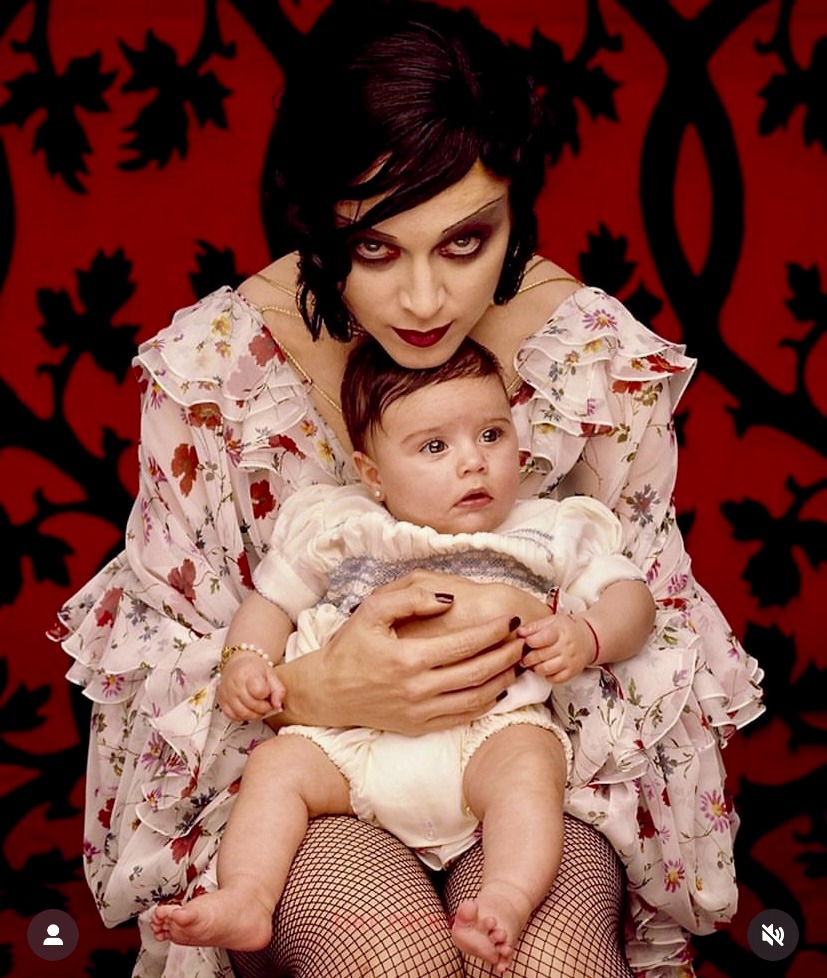
“Poor is the man. Whose pleasures depend. On permission of another” - Madonna
Rocco Ritchie (Update 19 Desember 2025)

"Sexo, Violencia y Llantas” by Rosalía - 6 November 2025
The song “Sexo, Violencia y Llantas” by Rosalía is a high-energy, rebellious track that mixes urban beats with her signature flamenco influence. Here’s a breakdown of its meaning:
-
Title Translation: “Sex, Violence, and Tires” – the words are symbolic rather than literal.
-
Themes: The song talks about freedom, excess, and living on the edge. It paints a picture of nightlife, fast cars, and chaotic energy, using sex, violence, and car imagery as metaphors for risk, desire, and rebellion.
-
Tone: It’s both playful and provocative, reflecting a bold, unapologetic attitude. Rosalía often mixes metaphor and storytelling, so the song reads like a cinematic snapshot of a wild, almost chaotic lifestyle.
In short, it’s not meant to glorify literal violence or sex, but to capture a feeling of intensity, excitement, and living life without rules.
Please visit Sketchbook | click here |
About The President Javier Mile
Argentine economist and politician who became President of Argentina in December 2023. He is known for his libertarian and outspoken views, often challenging traditional political norms in Argentina.
Personal Life:
-
Milei is not married and does not have a spouse, so there is no “first lady” of Argentina under his presidency.
-
He has been private about his personal life and family. Most of his public image focuses on his politics and economic views.

Photo: Wikipedia.org - Eva Perón to meet Pope Pius XII (1947)
(Update: 20 December 2025)

Digital Artwork By Pieter Lategan 2026 - Title: Gift to Pierre | Narrative Monumentalism |
Klaar Hout
Ek kan nie meer nie,
ek weet nie meer nie, Here.
Ek wil verstaan, wil nie meer weet nie.
Ek ken U, ek weet van U,
ek weet U weet net van my.
Ek gaan nie meer.
Ek is dood as ek by U is.
Ek hou van later-taal, ek gebruik dit dikwels.
Ek laai dit, God.
O Here, die hel is hier.
Dis warm, dit vertel ’n storie.
Here, dit is narratief.
Here God, ek verstaan dit nie, ek weet nie.
Ek hou van vloek — God weet, ek sal gestraf word.
Misbruik die woord, ontken die splinters in my oë.
Erken glas wat sny met en tot die dood.
Die kruis is verby, maar God het gelei.
Hy is vry, Here God, vertel my.
Ek wil nie meer nie, die hel is hier.
Dan glo en mis ek al die goeie hier.
Maar Here, U weet: as dit beter gaan,
is dit net plesier, my dier… met die spier.
Ek kom daar aan, ek vra: waar is die hel?
Die een wat die hekkie bewaar, sê daar.
Ek sê toe ek sien waar.
My ma en die haarbrak kom daar aan, sy sê: ek het gesê daar.
Ek sê: ek weet, dis waar.
Ek kom daar aan en voel dis effens koud.
Hulle vra toe dat ek asb moet wag,
want die hout is klaar.
- Pieter Lategan, 2026
Pieter Abraham Lategan (My Vader)
Gebore: 30 November 1947
Oorlede: 9 Junie 2006 - Stilbaai Suid-Africa
Frans Claerhout
Gebore: 15 Februarie 1919
Oorlede: 4 Julie 2006 - Bloemfontein, Suid-Afrika
Vladimir Grigoryevich Tretchikoff
Gebore: 13 Desember 1913
Oorlede: 26 Augustus 2006 - Kaapstad, Suid-Afrika
Sabrina Carpenter & Madonna - Like A Prayer | Coachella 2026 | Weekend 2
read more | click here
Friday, February 20, 2026
Mukurob (Gods Finger) Namibia — Memory, Absence, and Presence

Digital Design by Artist - 2026
Silent Monumentalism Project
Mukurob — the iconic “Finger of God” — once stood as a singular natural monument rising from the southern Namibian desert. For generations, travelers on the B1 highway paused to see its elegant form reach toward the sky. Although the original formation collapsed in 1988, its memory remains part of Namibia’s geological and cultural heritage.
Silent Monumentalism asks a different question: not how to rebuild what was lost, but how to honour absence, space, and presence without replacement.
This image is not a literal reconstruction. It is a presence in absence — a field of light that stands where Mukurob once stood, a quiet marker of memory and attention.
It does not explain, it does not narrate; it simply invites presence — a place where form and space coexist before meaning. In this way, Mukurob continues to stand — not as a physical rock, but as a remembered presence in the mind, the landscape, and our collective attention.
Distance
Mariental (north): ~180 km
Keetmanshoop (south): ~140 km
Asab (nearest settlement): ~15 km
Silent Monumentalism — Pieter Lategan, 2026
Reference:
Mukurob - 18 February 2026
Wednesday, February 18, 2026
Mukurob | "Gods Finger" | a Natural Monument in Namibia | Digital Artwork (Update 18 February 2026)

Silent Monument (Structural Study I)
Related project:
The Mukurob (God’s Finger) study and sketchbook notes can be viewed here: Click Here.
Why Stonehenge Endures — And What Mukurob Teaches Us About Building Today - (Update 15 February 2026)
Stonehenge is one of the most remarkable prehistoric monuments in the world, not only because of how it looks, but because of how its stones came to be there. Archaeological research shows that many of its stones were not taken from the immediate area. The smaller bluestones came from the Preseli Hills in southwest Wales, and scientific studies suggest that the central Altar Stone may have come from as far away as northeast Scotland. These stones were deliberately selected and transported by people over great distances. This was not an accident of nature, and not the result of erosion or glaciers. It was a human decision, carried out with effort, planning, and intention.
What Stonehenge teaches us is not that local stone was “bad,” but that material choice matters. The builders chose specific stones and moved them because they wanted a monument that could stand, carry weight, and endure. Stonehenge is therefore not only a form in space, but also a record of human will, collaboration, and material understanding. Its endurance is not only a gift of time, but the result of deliberate human decisions about material and structure.
In Namibia, the story of God’s Finger (Mukurob) is very different. It was a natural monument, shaped by geological time, wind, and erosion. It stood as long as its material allowed — and then it collapsed. This was not a human failure, and not a mistake. It was the limit of natural material meeting time and gravity.
If we think today about rebuilding, re-marking, or re-imagining that place, we cannot simply repeat what nature already showed us does not last. The original stone is not strong enough to carry the same presence into the future. Instead, we must think like builders, not like erosion. We must use contemporary knowledge, treated materials, and advanced technology to create a structure that looks and feels like the original presence, but is structurally corrected by human understanding.
In this way, a new monument would not pretend to be nature. It would openly be a human act: a deliberate choice of material, a deliberate act of construction, and a deliberate decision to let form, weight, and balance stand against time. Just as Stonehenge is not a natural accident but a human statement in stone, a new monument at Mukurob would be a human answer to loss — not a copy of what erosion has already taken away.
This is not about replacing nature. It is about acknowledging its limits, and responding with responsibility, knowledge, and care.
Read more in Pieter Lategan Sketch Book: Why Stonehenge Endures and What Mukurob Teaches
Words
All
over my space
are words
a lot of words
are words
but the real meaning
is that all of this
these words
are all
love words.
Pieter Lategan
Silent Monumentalism is a way of writing that trusts silence as structure, repetition as gravity, and simple language as presence. It does not explain; it stands. The white space on the page is not absence but architecture. Words are pared down not to weaken meaning but to sharpen it — so that each one carries weight like a quiet pillar in the landscape of the page. This style invites readers to slow down, to return, and to feel what is unspoken between lines. It is a monument built not with stone, but with stillness.
Explore the ideas behind this poem and my sketchbook work, click here

Image Description — Silent Monumentalism Proposal
This image presents a conceptual reconstruction of Mukurob, also known as God’s Finger, reimagined through the principles of Silent Monumentalism. The monumental sandstone pillar rises once again from the Namib Desert, stabilized through discreet, non-invasive interventions that remain visually subordinate to the geology itself. Ultra-thin tension systems and subtle ground stabilization are integrated quietly, allowing the monument to retain its sense of isolation, balance, and silence.
Rather than reconstructing Mukurob as a replica or spectacle, this proposal suggests a measured return of presence—one that acknowledges what was lost while offering a space for reflection and storytelling. People are drawn to places where history, memory, and form converge. They travel to see monuments not only for what they are, but for what they represent.
By restoring Mukurob through Silent Monumentalism, the monument becomes a narrative device: a way to tell the story of its rise, its designation as a National Monument in 1955, its collapse, and the fragile relationship between nature and human responsibility. This is not an attempt to erase the past, but to give the landscape its voice back.
Monuments matter because people seek them out. They want to stand before them, feel scale and time, and understand what once stood there. This proposal argues that bringing Mukurob back—quietly, respectfully, and honestly—allows the story of what happened to be experienced in place, not forgotten in photographs alone.
Sometimes preservation is not about stopping time, but about giving memory a form once more.
Mukurob, commonly known as God’s Finger, was a naturally occurring sandstone pillar whose significance lay not in human authorship, but in geological time, balance, and restraint. Declared a National Monument in 1955, Mukurob marked an important cultural moment in which a fragile natural formation was formally recognized as monumental. Its collapse in 1988 should not be understood as a symbolic failure, but as the inevitable outcome of long-term erosion, material fatigue, and gravitational stress acting upon a highly precarious structure.
However, inevitability does not preclude responsibility. While Mukurob was shaped by natural forces beyond human control, its status as a national monument introduced an ethical obligation to explore measured, non-invasive forms of preservation. The challenge was not to dominate or arrest nature, but to intervene with restraint.
Silent Monumentalism proposes such an approach. Rather than employing visually assertive engineering solutions, this methodology emphasizes minimal intervention, geological sympathy, and visual silence. It aligns architectural preservation with contemporary scientific practices, including micro-structural analysis, stress modeling, and environmental monitoring. The objective is not permanence, but temporal extension—allowing a monument to continue existing without compromising its symbolic and visual integrity.
Applied to Mukurob, Silent Monumentalism could have incorporated ultra-thin tension systems anchored discreetly into surrounding bedrock, low-impact base stabilization using material-matched micro-buttressing, and embedded sensor technology to monitor vibration, wind load, and progressive material degradation. Such technologies—now common in heritage conservation—could have identified critical stress thresholds long before structural failure occurred.
Importantly, these interventions would have remained visually subordinate to the monument itself. Silent Monumentalism does not seek to overwrite nature with technology, but to use science as a quiet collaborator. It acknowledges impermanence while rejecting passive neglect. Mukurob fell not because it lacked value, but because its fragility was left entirely unattended.
Silent Monumentalism exists to address precisely this tension: to preserve without spectacle, to stabilize without dominance, and to listen to monuments shaped by time rather than speak over them.
Sources:
Wikipedia — Stonehenge
Wikipedia — Bluestone (Stonehenge)
Wikipedia — Altar Stone (Stonehenge)
Reference:
Mukurob | "Gods Finger" |National Monument
Change 1: Create an opening on either the left or right side of the structure, shaped to follow the outline of the former Mukurob (“God’s Finger”) rock formation. Change 2: This opening will be oriented to face the exact direction where the original Mukurob (“God’s Finger”) once stood, aligning the new structure with what existed before and creating a visual and conceptual connection between the past and what is now being re-created.